Visit: 18 January 2025
Price: **
Website: https://www.albatrossdeathcult.co.uk
The Review:
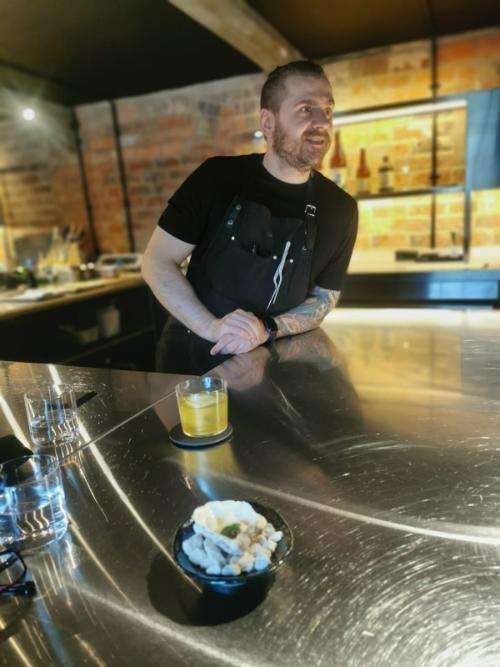
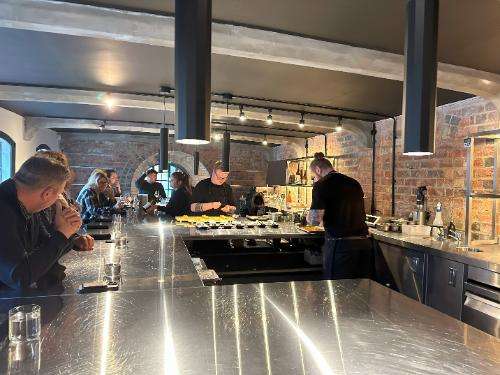
Albatross Death Cult is a Japanese-influenced seafood restaurant located in a Grade II listed restored warehouse in Newhall Square on the edge of Birmingham’s Jewellery Quarter. The restaurant has a minimalist interior with stainless steel, cement and stripped-back brickwork. Fourteen diners sit around a stainless steel counter on stools chatting to the chefs as they prepare the food in front of you. The atmosphere is relaxed, and the food and wines are excellent.
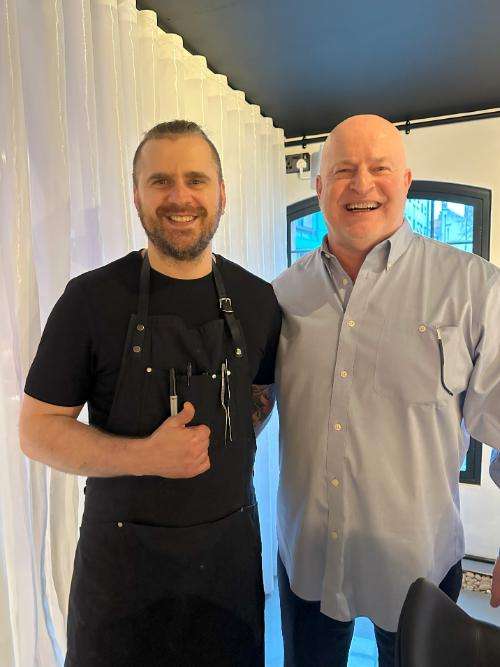
This is the latest restaurant from Alex Claridge (owner of the superb The Wilderness restaurant in Birmingham) and his partner Rachael Whittle. The kitchen is led by Piotr Szpak, who served as Sous at The Wilderness for over six years, with Oliver Grieve who joined The Wilderness as a UCB student after time at L’Enclume.
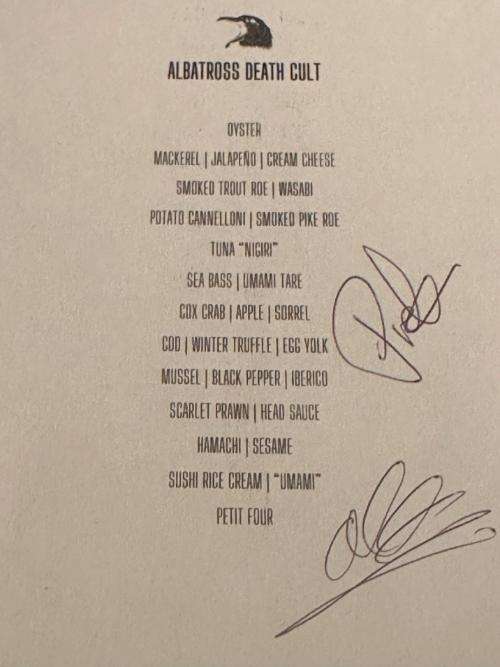
Albatross serves a tasting menu, with 12 plus courses, priced at £99/person (increasing to £115/person from April 1st 2025). Paired wines and sakes are available, which I can highly recommend.
 The negronis were unusually made with scotch, and were spectacularly good. We asked for the paired selection of sake, instead of the wine choice, and these were perfectly matched. This is a great option that works extremely well with the food here.
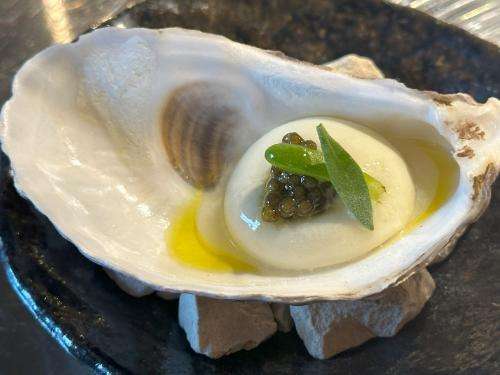
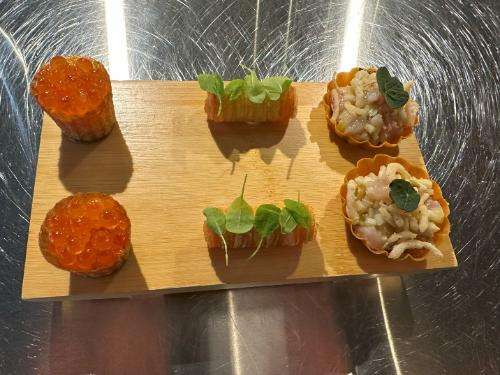
We started with a Porthilly oyster canape with an oyster velouté served with Oscietra caviar, sea herbs and some smoked olive oil in the shell. Next was a trio of canapes. A baked wonton tart with Scottish mackerel, served sashimi-style and finished with jalapeno oil, with yuzu kimchi, crispy onion and apple; a tube of potato cannelloni made from spiralised potato, deep fried until it was light and crispy, filled with smoked pike roe and a wasabi crème fraiche, served with lemon sorrel on the top; and a croustade filled with trout belly, wasabi pesto and topped with smoked trout roe. These were all very enjoyable, with excellent flavours and textures.
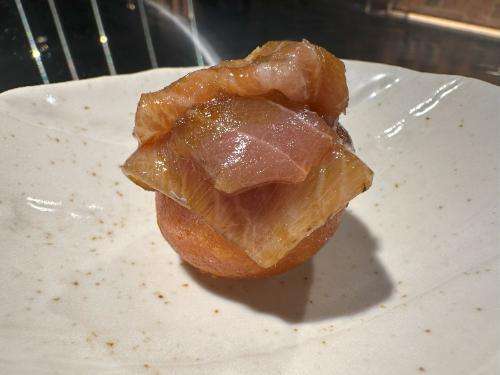
Next was a take on a tuna “nigiri” (a type of sushi consisting of a small ball of rice, smeared with wasabi paste and topped with raw fish) which was a rice flour donut, fried and then tossed in chili oil, which was nicely aromatic and not too spicy, with Cornish blue fin tuna chutoro (medium fatty tuna) on top, and some hot sauce.
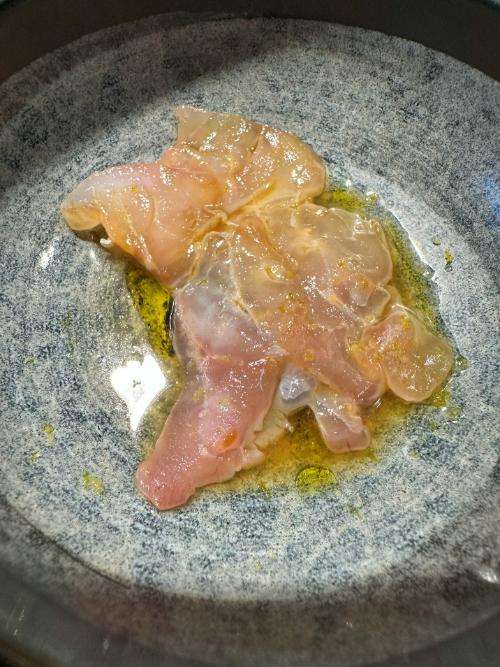
Then we were served wild sea bass that had been dry aged for five days, cured in muscovado sugar, thinly sliced, and dressed with soy sauce. There was a nori paste (which had sweetness and a full-bodied aroma) combined with yuzu koshu to give a slight spiciness and a clean citrus finish, giving a very enjoyable sweet, spicy, salty and zesty flavour. It was finished with smoke, yuzu vinegar, and the zest of fresh yuzu sourced from Sussex.
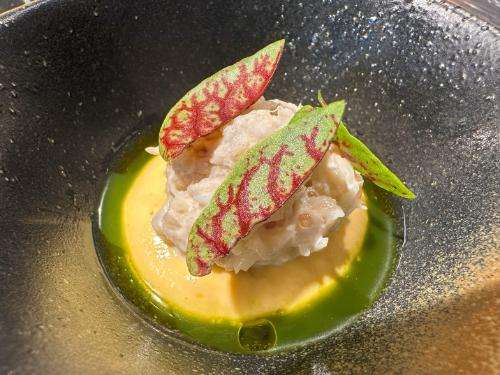
The next course was Devonshire cox crab. On the bottom, the brown crab meat had been infused with lemon grass, garlic, and chilli. On the top the white crab meat had been dressed with a white soy aioli, with finger limes, apple, sorrel juice, and finished with a touch of smoked olive oil. We started the sake flight with Konishi Silver which has a relatively low ABV, and low acidity. It’s a Ginjo sake from Konishi Shuzo so it had refreshing fragrance and was quite perfumed and aromatic. The flavours were silky and smooth with notes of apple, pear, and citrus, and it was very dry on the finish. It cut through the richness of the crab, and complemented the apple and sorrel in the dish.
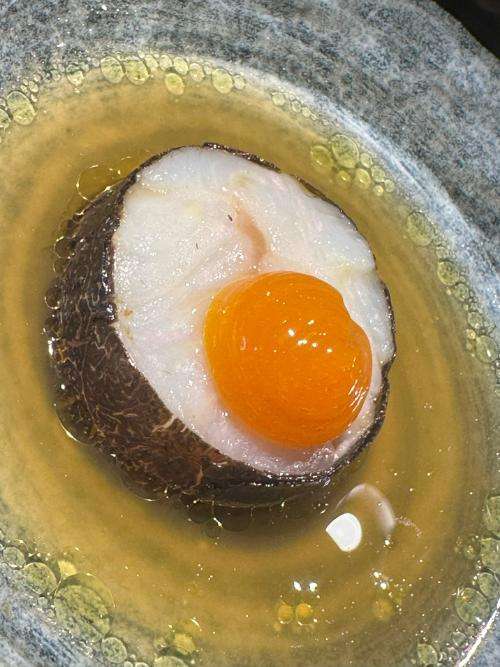
The Scottish cod had been dry aged for five days, wrapped with Wilshire winter truffle, and served with an egg yolk puree on top, finished with a smoked cod broth split with yeast butter. The dish was served with a sake named Ancient Mountain which is a well-balanced, rich Futsushu (a non-premium table sake that enables the brewers to create interesting interpretations without having to adhere to the rules!) that pairs well with food. It had notes of sweet cereal, soy and mushrooms on the nose, with smooth and creamy rice flavours resulting in a rich, medium-bodied sake with light acidity. It was a little bit more rounded on the palette than the previous pairing, and was a little bit more delicate and softer in terms of the flavour profile. It worked really well with the black truffle in the dish.
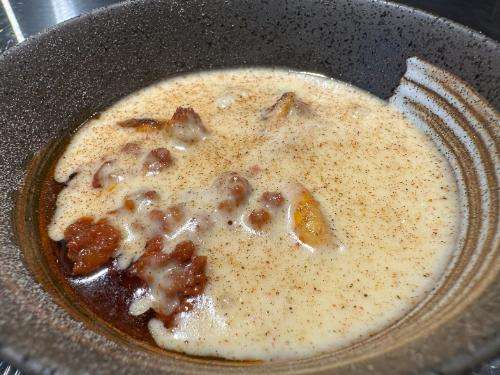
Next were Cornish mussels which were lightly cooked in a dashi. The mussels were then cold smoked and pickled in black pepper and vinegar for two days, while the cooking liquid was used to make a velouté with Iberico ham. It was served with a mixture of white and black pepper corns on top. This was a remarkably good dish with superb flavours. It was paired with a very interesting red wine from Bourgueil, Loire, in France. The “Hurluberlu” made by Sebastien David is a biodynamic 100% Cabernet Franc, fermented with native yeasts using carbonic maceration techniques, and is unfiltered, unfined, with has no additional sulphites. The wine has a jammy juiciness, with almost no tannins. It was served slightly chilled so it was very fresh on the palate, and it paired well with the smoky, meaty notes of the mussels, and its gentle background spice complimented the pepper in the dish.
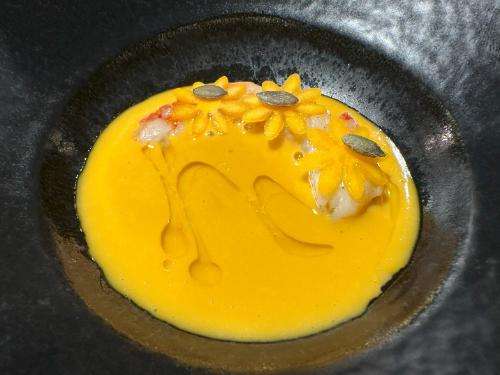
The Argentine scarlet prawns were cooked in prawn butter, and served in a vibrant orange coloured prawn head sauce split with prawn shell oil, with miso, pumpkin seeds, and pickled pumpkin flowers. This was very good. The sake to accompany the prawns was named Moonlight, which was a full-flavoured, sweet Junmai nigori (cloudy) sake from Yamatogawa Shuzo brewery. It’s cloudy because they coarse-filter the fermented sake to only partially remove the rice lees from the mixture. When you taste it you get a rich creaminess with a strawberry taste profile, almost like strawberry yogurt or milkshake, and that sweetness elevated the sweetness of the prawn.
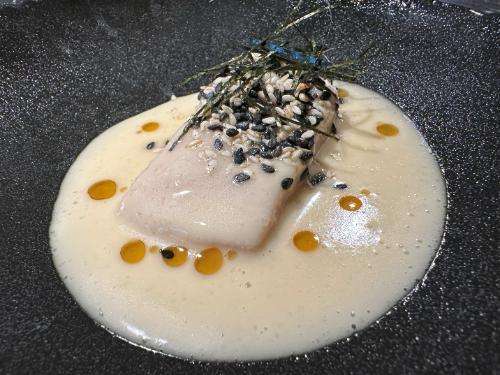
The final savoury dish was fresh Hamachi (Japanese amberjack) poached in butter, served with ginger and sesame dashi, furikake (a dry Japanese condiment that typically consists of a mixture of dried fish, sesame seeds, chopped seaweed, sugar, salt, and MSG), and smoked sesame oil. The final sake of the flight was Clear Sky. It’s Honjozo style, where a small amount of brewer’s alcohol is added to the fermenting sake mash to manipulate the flavour profile slightly. It had aromas of banana, red apple, and bread, with flavours of stewed plums, apricot, and pineapple on the palate with some cereal, toast, and slightly nutty flavours. The nutty cereal flavours complemented the sesame in the dish.
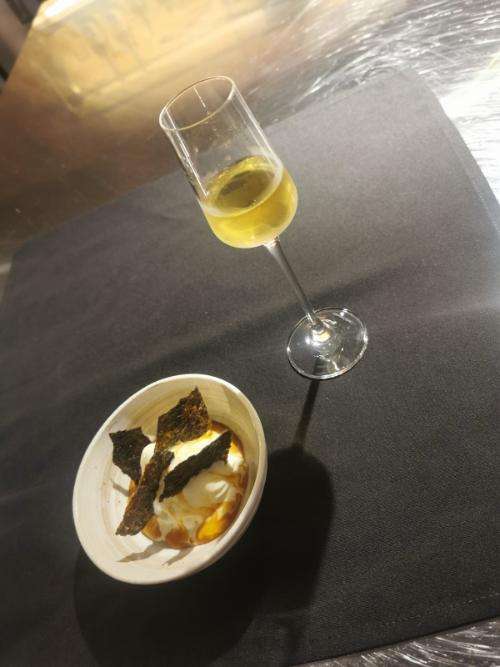
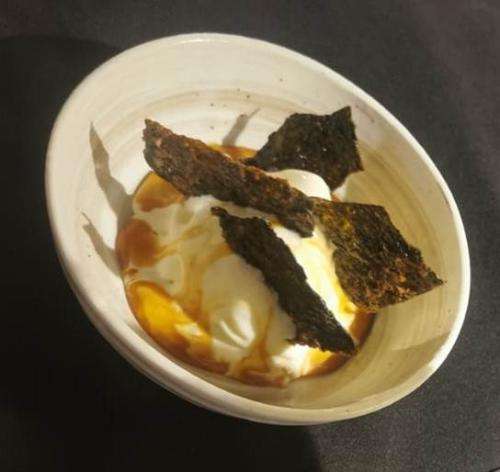
The dessert was sushi rice ice cream, with a Shiitake mushroom caramel sauce, and candied nori on top. This was one of the best tasting desserts I have ever eaten. It was a clever balance between sweet and savoury, with mushrooms, seaweed and rice. Magnificent! It was accompanied by a very good botrytised 100% Pinot Gris Greywacke from Marlborough, New Zealand. This was a beautiful dessert wine with flavours of quince, praline and dark orange marmalade, but with a bright acidity that balanced the sweetness.
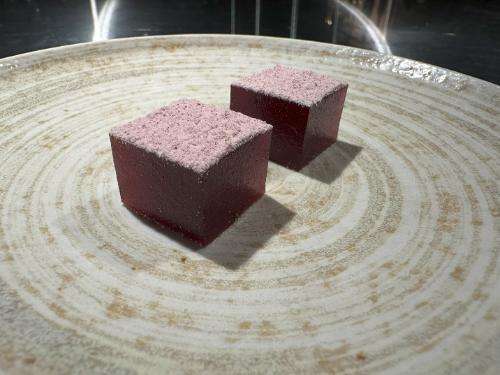
Finally, the petit four was a pâtes de fruits peach jelly, basically a peach gummy with a rose petal flavour and a pop of sherbet.
This was a very enjoyable lunch. The food was innovative, bold and vibrant. Some of the flavour combinations were extraordinarily good. It’s relaxed and laid-back, and you can chat to the chefs as they prepare your food. Not only did our sommelier have an encyclopaedic knowledge of the sakes and wines we were served, but she could explain why they complimented the food so well. We all really enjoyed the meal, and will be going back for more.
The Menu:
The Food:
Head Chef Piotr Szpak and The Gastronome:
The Restaurant:

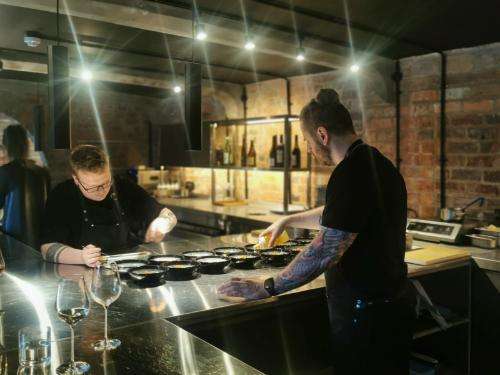
Chef Piotr Szpak: