Address: The Glenturret Distillery, The Hosh, Crieff PH7 4HA
Visit: 16 November 2024
Award: 2 Michelin Stars
Price: ***
Website: https://www.theglenturretrestaurant.com/dinner
The Review:
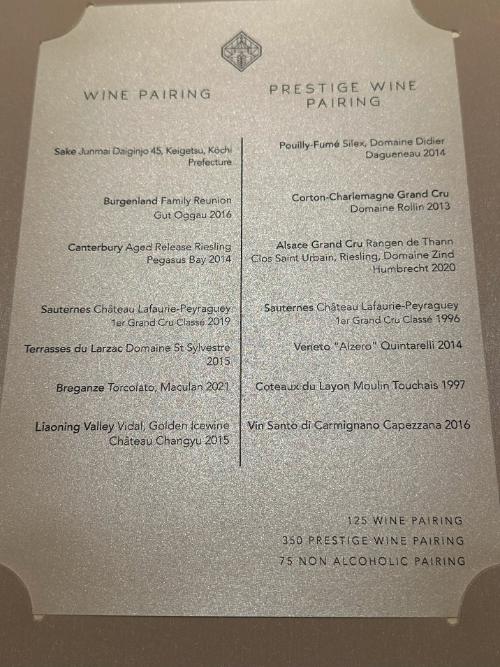
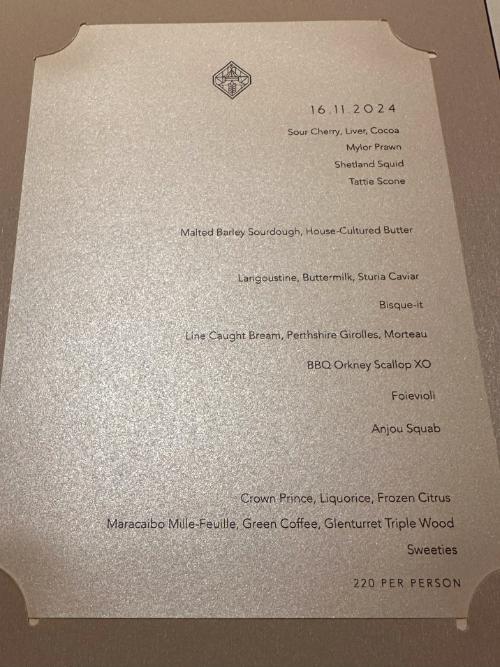
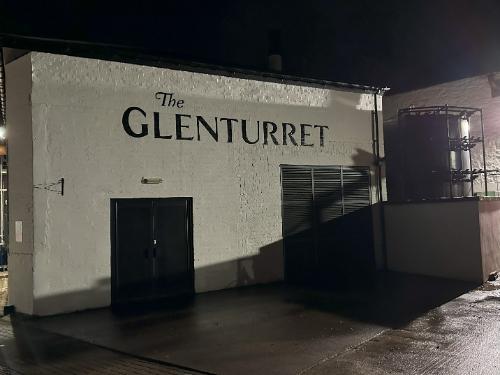
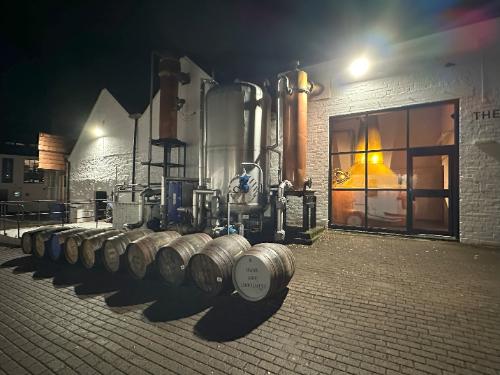
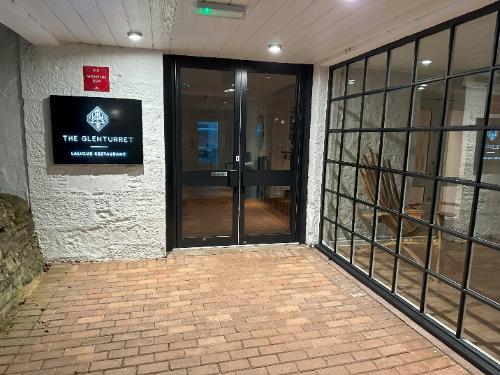
The restaurant is situated at the Glenturret Distillery in Crieff, considered to be Scotland’s oldest working whisky distillery dating back to 1763 (now owned by the luxury French crystal house, Lalique). Head Chef Mark Donald serves a multicourse gastronomic tasting experience in a six-table dining room overlooking the River Turret. The tasting menu costs £220 per person, which is payable on booking, and there is an optional wine pairing at £125 per person, or Prestige Wine Pairing at £350 per person, or non-alcoholic pairing at £75 per person. A vegetarian menu is available.
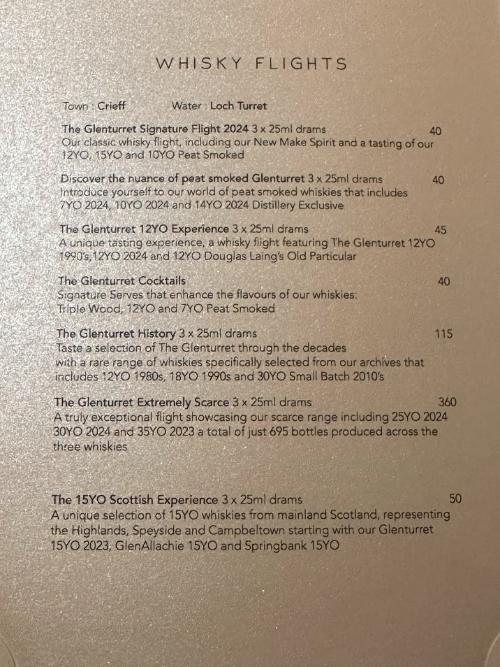
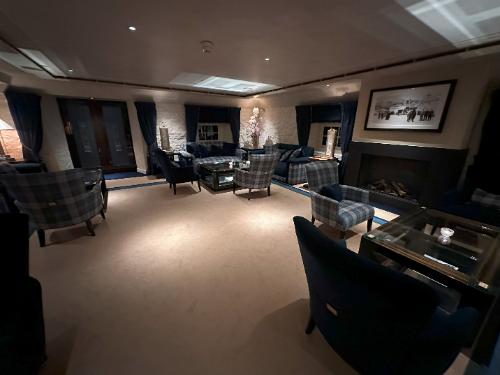
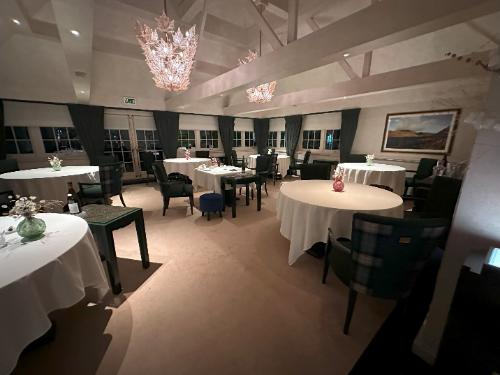
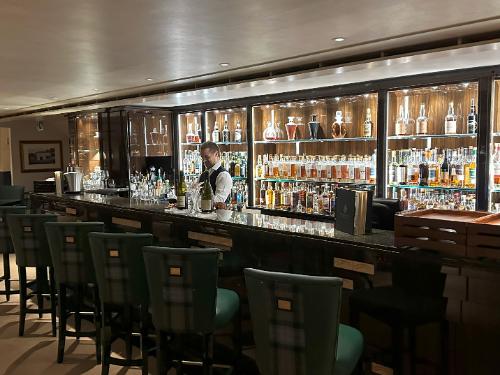
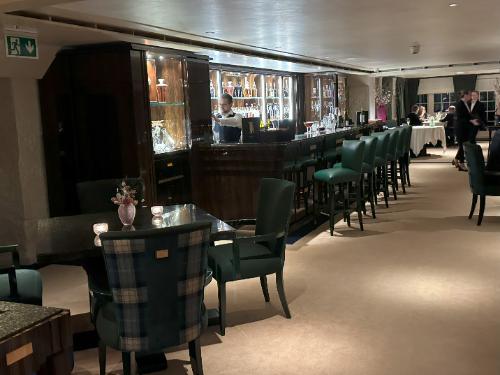
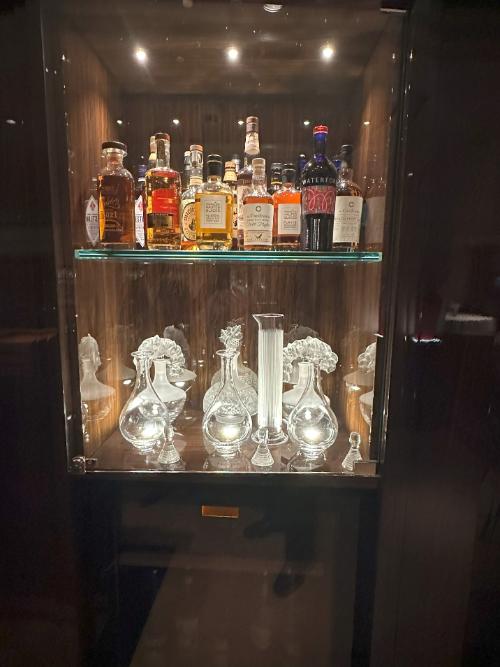
When we arrived we were shown into the lounge and offered cocktails. The barrel aged negroni was excellent. It was made using Aberturret gin, Mondino Amaro instead of Campari, and Lustau red vermouth, and aged in a sherry cask. There was a wide range of cocktails and aged malts available, as well as whisky tasting selections, and an impressive wine list. The tables in the bar area and restaurant were well spaced and very comfortable. The restaurant displays beautiful Lalique chandeliers, tableware and glassware.
 The wine list was an impressive tome, brought to our table on a stand, so we could make our selections. Our sommelier was very knowledgeable and helped us choose from the 600 bin list which focuses mostly on France, featuring many of the greatest producers and finest Domaines and Châteaux. There are also wines from the private collection of co-owner Silvio Denz, with wines from his estates in Bordeaux (Château Lafaurie-Peyraguey in Sauternes, and Château Faugères in Saint-Emilion), along with wines from his interests in Tuscany and Catalonia, as well as wines from the other co-owner Dr. Hansjörg Wyss’s Halter Ranch winery in California.
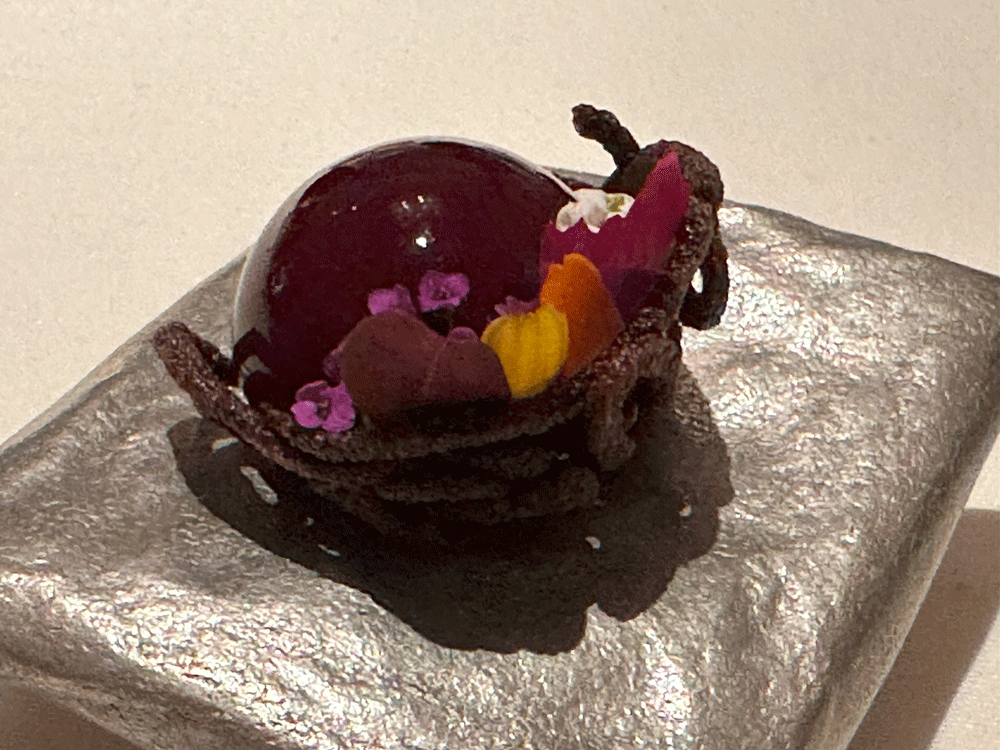
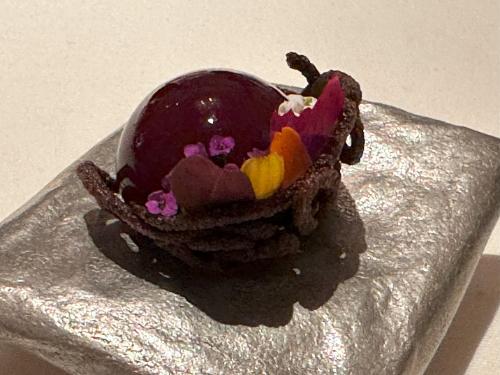
We started our meal with four canapes. The first was sour cherry, with liver parfait and cocoa. A delicate Jerusalem artichoke, tapioca, and cocoa basket was filled with a parfait made by blending chicken livers, foie gras, white and ruby port, madeira, brandy, and creme fraiche. This was glazed with a sour cherry puree, and finished with a sour cherry gel and garnished with wild flowers.
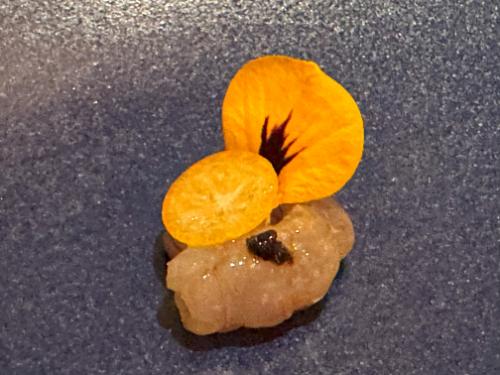
Next was a canape of a Mylor prawn which was served fresh with a glaze made from a reduction of the prawn heads, a salsa macha cream (made with whipped cod roe, dried Mexican chillis, sunflower seeds, pumpkin seeds, garlic, and ginger), fresh kumquat, and a fresh shiso leaf (a Japanese herb with a fresh, citrusy, and herbaceous flavor).
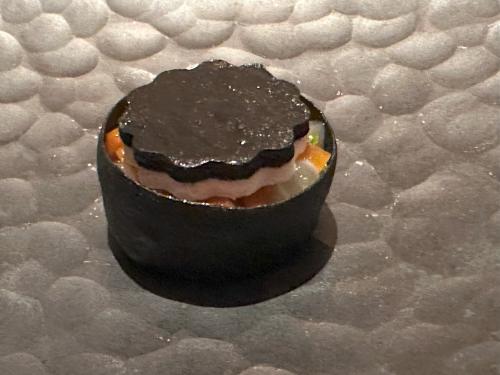
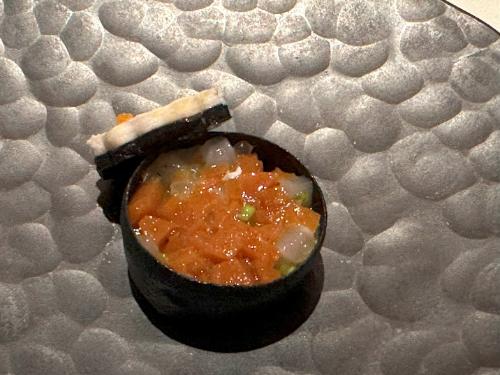
The Shetland squid canape consisted of a squid tartare in a squid croustade with a lid (made with charcoal, and beer, so it was black), with braised squid tentacles set into a light jelly, a squid mousse, and dressed with finger lime & olive oil. This was magnificent.
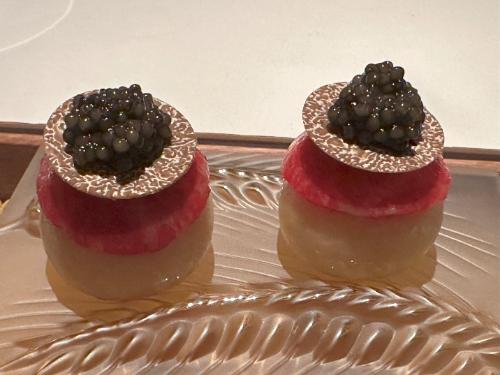
The final canape was Mark’s version of a tattie scone. Here, the scone dough was made using a bao bun mix (with cooked potato, baked potato milk, and yeast) made into a dough, proved, steamed, and finished in a frying pan to add some colour and crispiness. This was topped with potato mayonnaise (made using baked potato, sherry vinegar, garlic, and egg yolks, blitzed with rapeseed oil and melted chicken fat), and superb Highland Wagyu. The beef was reared in Blackford Farms in Perthshire, and it was glazed with tomato, reduced smoked beef sauce, and Minus 8 vinegar. It had finely chopped capers underneath and was finished with an egg yolk jam. All of this was topped with a slice of Hungarian Autumn truffle, and a spoonful of Sturia’s Osciètre caviar served at the table. This was stunningly good!
These four canapes were excellent, bursting with flavour and with great textures. They were totally different to canapes served at other two and three starred restaurants I’ve visited. A very impressive start!
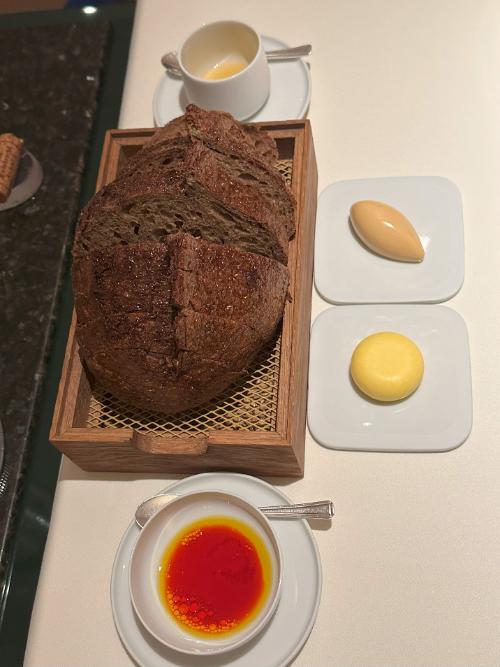
The bread was made using a sourdough starter and a dough mixture of Campilette and Manitoba flours, with light rye, malt flour, beer, and cooked malted barley (from the Glenturret Distillery). It was glazed with molasses, IPA beer and butter. The bread had a good texture and a nice crispy crust. It was served with an excellent homemade cultured butter (cultured butter is treated with live cultures and allowed to ferment before it is churned, and this results in butter with a stronger, more lactic flavour), smoked brown butter, locally sourced wild flower honey, and a raspberry vinaigrette.
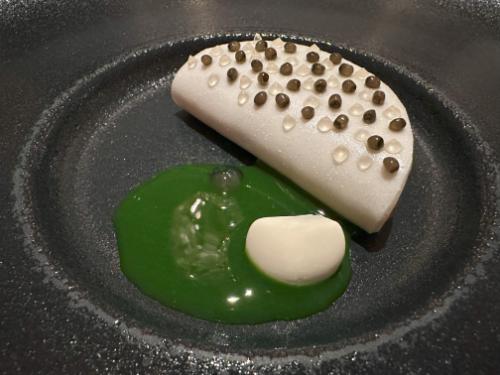
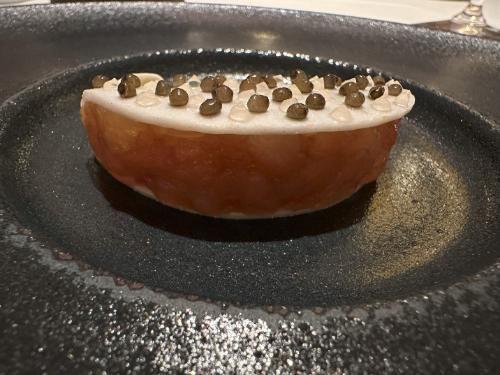
The next course was Scottish West Coast langoustine tails which were served raw, diced, and mixed with daikon radish that had been compressed in charcoal oil. Then a langoustine reduction (using the claws and shells in a bisque) had been added. This mix was served inside a taco. The taco was dotted with Jasmine Caviar from Sturia. A buttermilk jelly, and a Sanbaizu vinegar gel (made with tuna bonito vinegar, white soy sauce, and rice vinegar) were added. A spoonful of Greek yoghurt, blended with wasabi and buttermilk, was added to the plate. Finally, a chilled green sauce (made from fermented green tomato juice, with green grapes, cucumber, celery, ginger, coriander, dill, parsley, basil, lime juice and lime zest, green Tobasco, white soy, and dashi), with Matcha green tea, was whisked and then spooned onto the plate at the table. This was a superb dish that had fabulous flavours from the naturally sweet langoustines, saltiness from the caviar, the tart creaminess of the yoghurt cut through by the vinegar gel, and a stunning green sauce. All the flavours worked together and complimented each other.
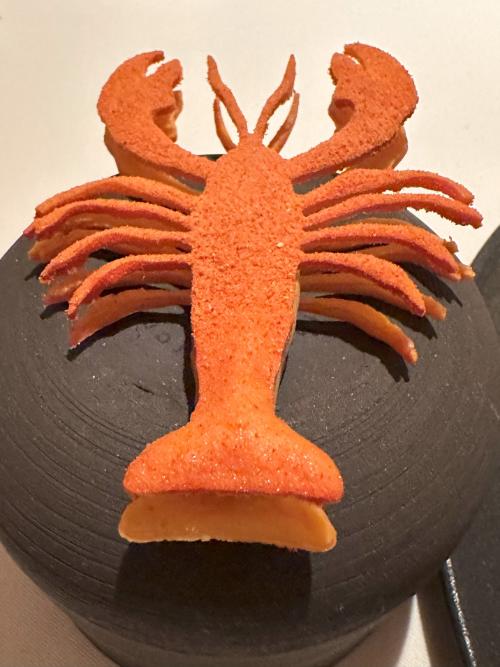
The langoustine dish was served with a very clever langoustine biscuit, named “Bisque-it”. This consisted of two tuilles made from the langoustine coral and parmesan, shaped into a langoustine profile. The tuilles sandwiched a delicious bisque cream that used the stock from the roast langoustine shells and heads, Noilly Prat, white wine, and langoustine butter. This whole dish was visually impressive and had superb tastes and textures.
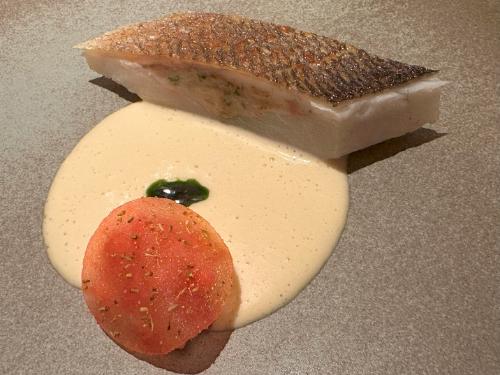
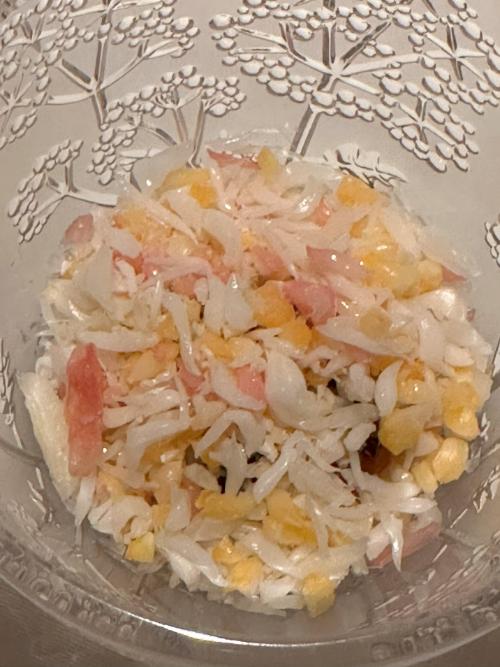
Our next course was pan roasted Cornish bream that had been dry aged, butterflied, and filled with a mousse made from scallops, girolle mushrooms, smoked Morteau sausage, and chervil. The fish was glazed with a bream caramel made from the fish heads and bones. A creamy sauce was made with mussel stock, vermouth, fish roe, fermented green chilli paste and yuzu. It was garnished with apples and sauerkraut. The fish was precisely cooked with a fabulously crispy skin. The smokiness from the sausage, with the slightly smoky, sweet and nutty undertones of the mushrooms, the creaminess of the sauce, and the acidity from the apples and sauerkraut, made a perfect taste combination. This was another sensational dish.
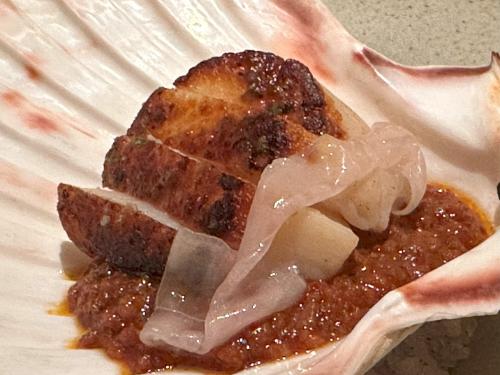
King Orkney scallops came next. The scallop was coloured in a pan, brushed with butter and miso, and seasoned with wild rose vinegar, Kaffir lime zest, and then finished on the barbeque. It was served in its shell with homemade guanciale (salt cured pork jowl), and crushed swede seasoned with sea buckthorn juice, on an XO sauce. The scallop was juicy and naturally sweet, and perfectly cooked.
The next dish, “Foievioli”, was served on a spoon. It was a raviolo made from semolina pasta, with an Albufera sauce (shallot, garlic, Madeira, white wine, thyme, brown chicken stock, foie gras and butter), napped with roast chicken butter and Vin Jaune, with a pear puree gel, all topped with shavings of Australian black winter truffle. One mouthful of pure delight.
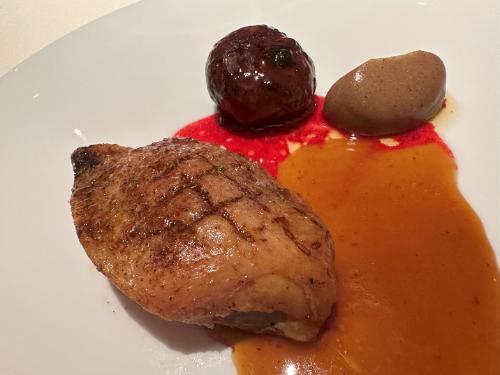
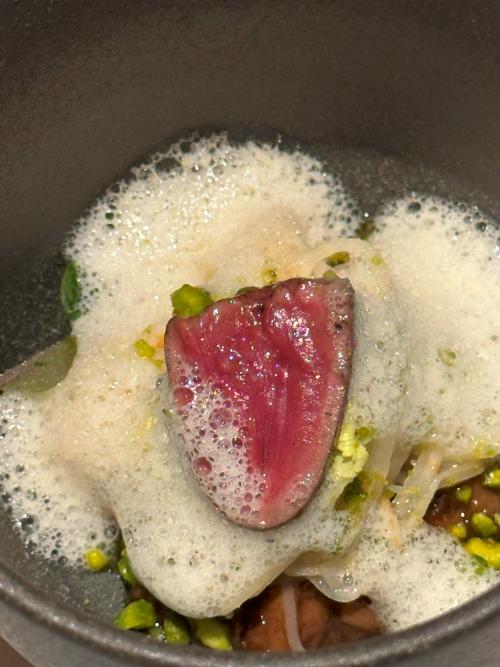
Our final savoury course was Anjou squab pigeon that had been pan roasted on the crown, and then finished on the barbeque while being brushed with a honey gastrique (made from honey vinegar, pink peppercorn, and thyme). It was served with a faggot (made from chicken mousse, squab liver, lardo, Iberico ham, and foie gras), a puree of pear and truffle koji, a raspberry vinaigrette, and squab jus. A side dish with the confit squab leg, celeriac ribbons, a celeriac milk foam, pistachio, celery leaf and wood sorrel garnish, and pan fried squab heart, completed the dish. The pigeon was perfectly cooked with great flavour, the faggot was sensational, and the confit leg and heart were delicious.
Our first dessert was Crown Prince pumpkin with liquorice and frozen citrus. Crown Prince is a blue-grey skinned squash with orange flesh. Here, it was used to create a pumpkin cream that was baked in a crème brûlée style, and served with a black sesame financier, fresh clementine and fresh bergamot, a liquorice gel, candied sweet potato, and citrus frozen with liquid nitrogen (white grapefruit, ruby grapefruit, bergamot, clementine, and pomelo). This was a very nice palate freshener with the citrus cutting through the pumpkin cream.
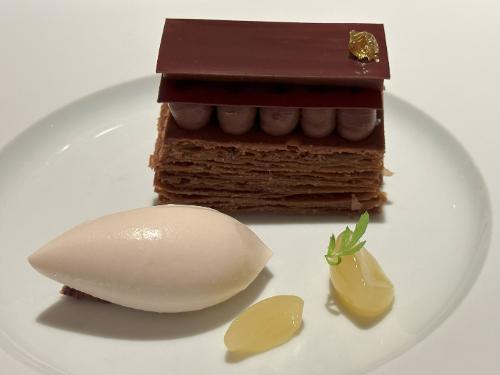
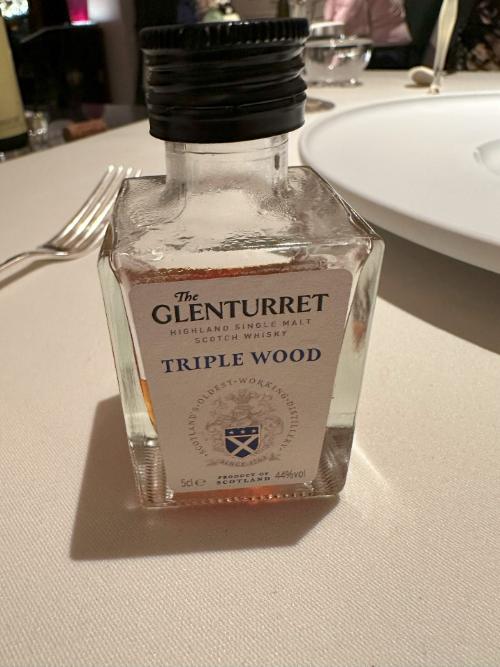
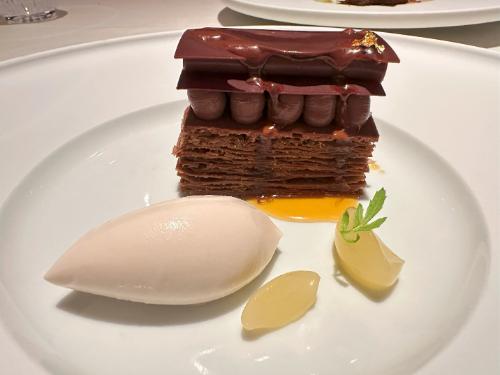
Our final dessert was Maracaibo chocolate mille-feuille, with green coffee, and Glenturret triple wood caramel sauce. The mille-feuille was made using Maracaibo 65% chocolate from Venezuela with caramelised puff pastry layers, and a Gianduja crémeux (Gianduja is a homogeneous blend of chocolate with 30% hazelnut paste, that was invented in Turin during Napoleon’s regency). It was topped with tempered chocolate and gold leaf, and served with a yuzu gel, a cocoa nib tuille, and a very good sorbet made from coconut and green coffee (from Difference Coffee). There was a small bottle of Triple Wood caramel sauce on the side (the sauce was finished with maple syrup, and Minus 8 maple vinegar and verjus). This was a very enjoyable dessert with excellent flavour combinations.
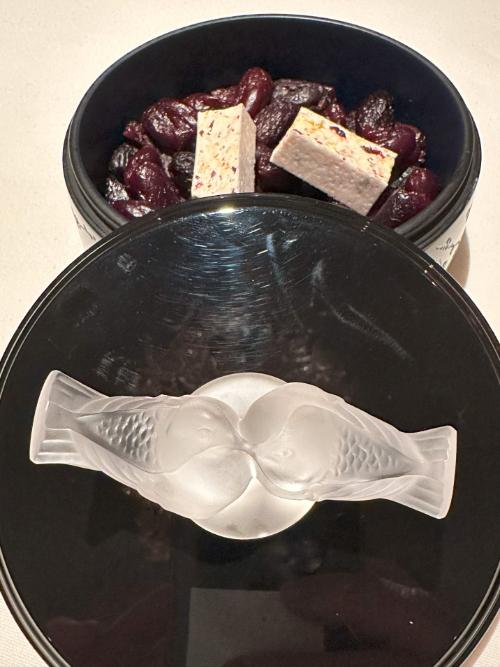
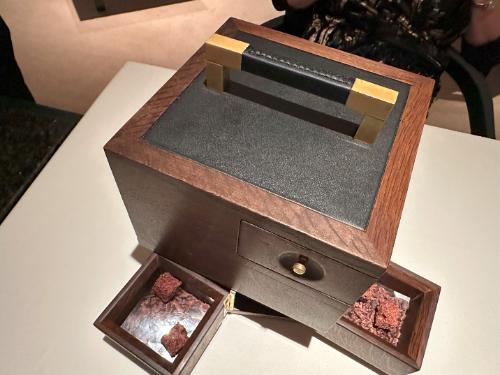
Finally, we were served petit fours. First there was a banana, passionfruit and Kalamata black olive nougat. This was followed by three more served from a decorative sweetie box – a Château Lafaurie-Peyraguey Sauternes jelly, a Maracaibo dark chocolate (from the famous Swiss chocolatier Felchlin) pumpkin seed praline with Alpaco ganache, and a Maracaibo dark chocolate caramel with Glenturret 10 Year old peat smoked whisky. All of these were superb.
Chef Mark Donald is unquestionably at the top of his game. This was the best meal I have eaten this year. His food balances local and global influences in exceptionally sophisticated and precisely crafted dishes. This meal was a master class in superb flavours and textures. Absolutely outstanding!
The service throughout the meal was top drawer. Restaurant Manager Romy Diplexcito was a great help explaining each of the courses to me.
This is a very popular restaurant and it is relatively difficult to book a table. However, I would urge you to persevere as you won’t be disappointed when you get there.
The Menu:
The Food:

The People:
Mark Donald was born and bred in Glasgow. After working in kitchens in Australia, Mark joined two-star Restaurant Andrew Fairlie at Gleneagles Hotel in Scotland, three-star Noma in Copenhagen, two-star Hibiscus in Mayfair, and worked for four years as Head Chef at Bentley in Sydney. In 2018 he joined Number One at Edinburgh’s The Balmoral Hotel retaining their Michelin Star.
Mark was appointed Head Chef when the Glenturret Lalique Restaurant opened in 2021 and his first Michelin Star was awarded seven months later. The second Michelin Star was awarded in February 2024.
The Gastronome, Chef Mark Donald and his Glenturret team:

The Restaurant:
Lalique display in the bar:
The Wine:
Cocktails: